
Per lo sciopero dei trasporti che coinvolge il corriere Gls gli ordini effettuati in questi giorni potrebbero subire un ritardo nella consegna.
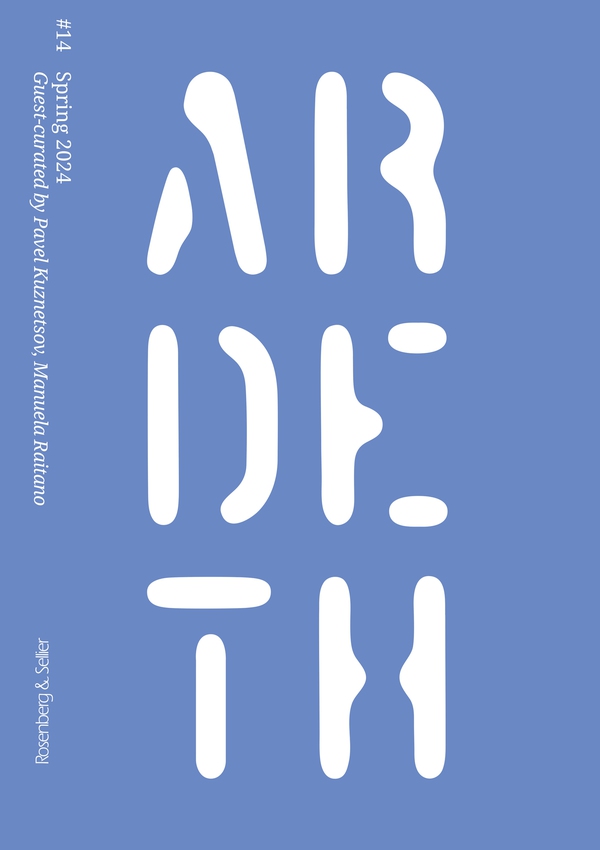
Ardeth #14
Social DRM
Dettagli
| FORMATO | |
| EDITORE | Rosenberg & Sellier |
| EAN | 9791259934161 |
| ANNO PUBBLICAZIONE | 2025 |
| CATEGORIA |
Architettura e urbanistica |
| LINGUA | eng |
Dispositivi supportati
Descrizione
In the realm of hard sciences, time is seen as moving forward towards the future, providing a framework for navigating the entropy and disorder of systems.
Time is seen subjectively in the humanities, as Bergson describes it in terms of recursive cycles exposed via sentient experience. From both angles, humanity is inevitably susceptible to time; either they die from entropic dispersion or depersonalizing repetition.
Much like science, myth reminds us that time ultimately devours life. But it also points to a possible escape: though Cronus eats his offspring, except for the youngest one, Zeus, who is saved by a stratagem "devised" by his mother Rhea – that is, replacing the baby with a stone. The image of the father suppressing the next generation is then replaced by the myth of the future emerging from the past, when all children are regurgitated by means of another of Zeus' tricks. Thus, the myth implies that intellect (the trick) and intellectual works (the stones) can transcend time: if human beings cannot endure their extreme transience, they can endure the lesser transience of their "constructions" in time. Born to last either physically or as collective memory, the very essence of architecture engages in a (titanic) survival endeavour. Yet, in an era anchored to the myths of perennial youth, shall we also allow the right to be forgotten?