
Per gli acquisti online: spese di spedizione gratuite da 25€ - Per i soci Coop o con tessera fedeltà Librerie.coop gratuite a partire da 19€.
EBOOK - pdf
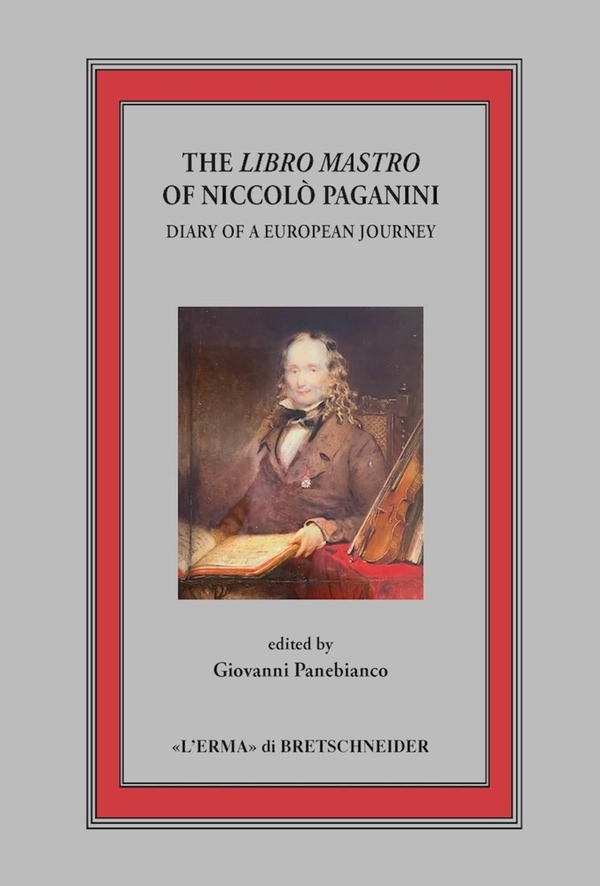
The Libro Mastro of Niccolò Paganini:
Protezione:
Social DRM
€ 130,00
Dettagli
| FORMATO | |
| EDITORE | L'Erma di Bretschneider |
| EAN | 9788891336095 |
| ANNO PUBBLICAZIONE | 2025 |
| CATEGORIA |
Storia |
| LINGUA | eng |
Dispositivi supportati
Computer
E-Readers
iPhone/iPad
Androids
Kindle
Kobo
Descrizione
185 years after Nicolò Paganini's death, to mark the 58th edition of the prize named in his honour, Genoa is promoting the first-ever complete publication of his *Libro mastro*, held at the city's Conservatoire. The manuscript is well known to scholars, but less so to the general public; since 1940 it has rarely been exhibited, and only images of the cover or individual pages are available online. Reproduced in 58 plates, the 'Libro mastro' – a 'diary' rather than a strictly accounting document – brings the reader face to face with the famous violinist and his European tour from 1828 to 1831. An exceptional undertaking, comprising 400 concerts and 100,000 spectators, which came to a definitive end in 1834. In total, 6 years, 2 months and 19 days, during which, despite health problems, Paganini travelled through nine countries, covering some 20,000 kilometres by carriage with his son Achille and his ever-present dog Cannone. The extraordinary success he enjoyed everywhere was not a mass phenomenon, yet nor can it be said to have been limited to a narrow elite. Analysing the Maestro's impressive earnings in comparison with those of other professions, the contributions gathered in this volume highlight how the tour was organised according to entrepreneurial principles. This represents a significant departure from the past, anticipating practices that would only become commonplace in later eras. *The Violinist and His Strategies* evokes dynamics characteristic of the modern musician: Paganini makes radical, sometimes contradictory choices; he reconciles his professional life with his family life; he manages relationships with orchestras, agents, impresarios and financiers. Conceived as a 'semiofor', the book is a narrative within a narrative, featuring archival reconstructions, personal accounts and literary allusions that open 'windows' onto historical, philological, emotional and cultural landscapes. Marking a watershed between past and present, the manuscript takes the reader on a journey through space and time, following in the footsteps of the man who, even today, epitomises the very concept of 'virtuosity'. There is no room, however, for the usual clichés – from Faustian pacts to alleged arrogance, from stardom to romantic misadventures – but rather insights into viewing Paganini through a poetic perception of reality that goes beyond mere observation. The various contributions, in harmony with the *Libro mastro*, emphasise the extent to which Paganini, as both violinist and composer, was able to embody the role of the authentic, eclectic and innovative artist, expressing a complexity rife with departures from the conventions of his time.